Static Cling Season Is Coming for Your Bootcut — Here Is What Actually Stops It
Quick Answer: Static is a humidity problem, not a laundry problem. The moment indoor air drops below roughly 40 percent relative humidity, synthetic fabrics start holding a charge and your bootcut clings to whatever you are wearing underneath. The fixes that actually work are a natural-fibre base layer, a metal or damp-hand ground, and raising humidity where you get dressed — in that order.
The hem was falling perfectly in September. Then the building turned the heating on, and now the left leg rides up your calf every time you cross the office.
It is not the trousers. It is the air.

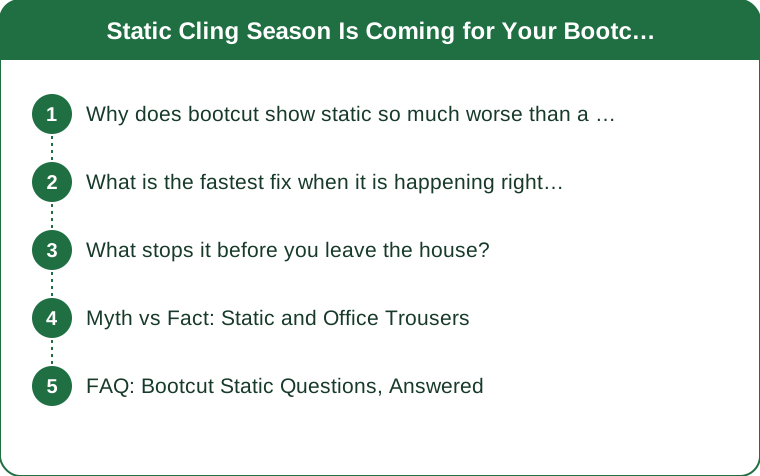
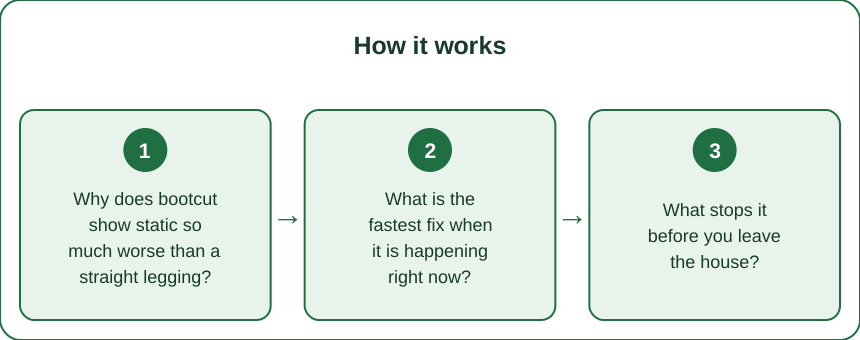
Why does bootcut show static so much worse than a straight legging?
Because bootcut has loose fabric below the knee, and loose fabric is what static actually ruins.
A fitted legging is already against your leg everywhere. When it picks up a charge, nothing visibly changes — it was clinging by design. A bootcut leg is supposed to hang away from the calf in a clean line, and that hanging column is exactly what a static charge collapses.
The mechanism is straightforward. Dry air lets your clothing accumulate a charge as fabrics rub against each other while you walk. The charged flare is then attracted to the nearest oppositely-charged surface, which is your leg or your tights. The flare wraps in, the line disappears, and the whole reason you wore bootcut to the office is gone.
Two things make it worse in an office specifically:
Carpet. Office carpet, especially synthetic loop pile, is a very effective charge generator, and you walk on it all day.
Layering. Tights or a base layer under bootcut doubles the number of surfaces rubbing together. This is why the problem appears in the same week you start wearing tights, and why people wrongly blame the tights.
What is the fastest fix when it is happening right now?
Touch something metal. A filing cabinet, a door frame, a desk leg, the metal stem of a chair. This discharges you and the effect is immediate.
It is also temporary. You will rebuild the charge within a few minutes of walking, which is why this is a management technique rather than a solution.
Things that work in the moment, roughly in order of usefulness:
- Run damp hands down the leg. Moisture is the whole game. Slightly damp palms, from wrist to hem, kills the charge and buys you twenty minutes.
- A metal object down the inside of the leg. A key, a metal pen, a hanger. Sounds like folklore, works reliably, because you are giving the charge somewhere to go.
- Hand cream or a light body lotion on your legs. Hydrated skin holds far less charge, and this is the fix with the longest duration of anything you can do at your desk.
- A safety pin on the inside of the hem. Genuinely effective, completely invisible, and it lasts all day.
What does not work in the moment: hairspray on the fabric, which leaves residue and stiffens synthetics; and rubbing the fabric hard, which usually makes it worse.

What stops it before you leave the house?
Three changes, and the first one solves it for most people.
1. Change what is underneath. Static needs two dissimilar materials rubbing. A cotton, bamboo, or wool base layer under a synthetic bootcut generates far less charge than a nylon or polyester one. If you wear tights, look for a higher cotton content or a wool blend for cold days. Switching the layer under the trousers fixes more cases than any treatment applied to the trousers.
2. Raise the humidity where you get dressed. You pick up most of the charge in the first ten minutes of the day. A bathroom that has just had a shower in it is a naturally humid room — get dressed there in winter and the difference is immediate and free. A small humidifier in the bedroom does the same job overnight.
3. Stop over-drying. This is the laundry change that matters, and it is not fabric softener. Tumble drying to bone dry is what charges the fabric. Pull synthetics out slightly damp and hang them for the last twenty minutes, or dry on low. A fabric that finishes drying on a hanger in room air holds almost no charge.
On fabric softener and dryer sheets: they do reduce static, and they also coat performance fabrics in a way that reduces stretch recovery and traps odour over time. For a bootcut you want to keep its shape, that trade is bad. Wool dryer balls with a few drops of water are the better option, or skip the dryer for the last stretch entirely.
Myth vs Fact: Static and Office Trousers
Myth: Static means the fabric is cheap. Fact: It means the fabric is synthetic and the air is dry. A high-quality nylon-elastane blend will static exactly as enthusiastically as a cheap one. Fibre content predicts it; price does not.
Myth: Fabric softener is the standard solution. Fact: It works by coating fibres, which is precisely what you do not want on a stretch fabric you need to keep its recovery. It also builds up over repeated washes and makes the problem worse in other ways — odour retention, reduced wicking, a slightly slick hand.
Myth: Anti-static spray is a gimmick. Fact: It genuinely works and is the most underused fix here. A light mist on the inside of the leg, not the outside, lasts a full day and leaves no visible residue. Keep a travel-size one in a desk drawer.
Myth: Natural fibres never generate static. Fact: Dry wool absolutely can. What natural fibres do is hold moisture, and moisture is what dissipates the charge. In genuinely arid conditions even cotton will misbehave. This is the point most static advice gets wrong, and it explains why the same trousers behave perfectly in a humid September and badly in a heated January.
Myth: It is worse in winter because of the cold. Fact: It is worse in winter because heated indoor air is dry air. Cold outdoor air holds little moisture, and heating it drops the relative humidity further. The temperature is a proxy; humidity is the cause.
FAQ: Bootcut Static Questions, Answered
What humidity level actually stops the problem?
Static becomes noticeable below roughly 40 percent relative humidity and gets bad below 30. Most heated offices sit in the 20s in midwinter. You cannot control the office, but getting dressed in a room at 45 to 50 percent means you arrive uncharged, and that covers the worst part of the day.
Does the fibre content on the label tell me what to expect?
Mostly, yes. High polyester and high nylon content charge readily. Higher cotton, modal, bamboo, or wool content charges less. If you are buying bootcut specifically for a heated office, check the composition tag before the price tag.
Will the safety pin trick damage the fabric?
Not if you pin through the inside of the hem allowance rather than the leg itself, where there are already multiple layers and a stitch line. Avoid pinning through a single layer of fine stretch fabric, which can leave a visible hole.
TL;DR:
- Static is dry air, not bad trousers. Below 40 percent humidity, synthetics hold a charge.
- Bootcut shows it worse than leggings because the hanging column below the knee is what collapses.
- Fastest in-the-moment fixes: touch metal, damp hands down the leg, lotion on your legs, a pin in the hem.
- Best prevention: a cotton or wool base layer, getting dressed in a humid room, and not tumble drying to bone dry.
- Skip fabric softener on stretch fabric — it kills recovery. Use anti-static spray on the inside of the leg instead.
The trousers were fine in September. Change the air and the layer, not the trousers.
See It in Motion
Seen here: High Waist Yoga Leggings with Side Pockets — shop it on bubblelime.com
Keep Reading
This article is for general informational and styling purposes only. Fit, sizing, and product availability may vary.