The Pocket Problem With Bootcut Yoga Pants at Work
Quick Answer: Activewear pockets are cut into stretch fabric with no structure, so anything in them distorts the leg line - a phone in a thigh pocket creates a visible rectangle and pulls the fabric asymmetrically. Trousers read as tailoring partly because their pockets sit in a stable, lined panel that does not move. Either choose a bootcut with no side pockets and carry a small bag, or choose one with a lined back pocket, which is the only pocket position that does not disturb the front line.
The fabric passes. The hem is right. And then you slide your phone into the side pocket and the whole thing announces itself from across the room.
Pockets are the last tell, and almost nobody thinks about them until the outfit is already on.

Why does a phone in an activewear pocket look so different?
Because there is no structure between the object and the visible surface.
A tailored trouser pocket is a bag of a separate, stable fabric attached to a waistband and a seam. The outer fabric has some weight, the pocket bag holds its own shape, and the contents sit within a defined space. The leg line is largely unaffected.
An activewear pocket is typically a shaped opening in a four-way stretch panel, sometimes with a mesh liner, sometimes with nothing at all. Stretch fabric conforms to whatever is inside it, which is the entire point in the gym - the phone stays still against the leg during a run.
At work, that same property is exactly the problem. The fabric shows the outline, the added weight pulls the leg down on that side, and the fabric tension changes visibly across the thigh.
There is a second effect people notice without identifying: a weighted pocket disrupts the drape. Bootcut trousers work by hanging cleanly from the hip and flaring below the knee, and anything pulling down at mid-thigh interrupts that line.
Which pocket positions actually survive an office?
In order from most to least workable:
No side pockets at all. The cleanest option, and increasingly common in the trouser-styled versions of bootcut activewear. Nothing to distort, nothing to think about.
A lined back pocket. The one position that does not affect the front line. It still shows an outline when sitting, and it is not ideal for a phone you use constantly, but for a card or a key it works.
A small hidden waistband pocket. Designed for a key or a card. Fine for exactly those and useless for anything larger.
A flat seam-line pocket. If the opening follows the side seam rather than being cut into the thigh panel, it behaves more like a trouser pocket. Worth checking before buying.
A thigh pocket. The one to avoid for office wear. It is the most useful pocket in the gym and the most visible one at a desk.
The practical test in a fitting room: put your actual phone in the pocket and look at your side profile. Not front-on - side. The distortion is largely invisible from the front and obvious from the side, which is the angle your colleagues see when you are walking past.

The carry solution most people skip
The honest answer for a lot of office days is to stop using trouser pockets at all.
A small structured bag at the desk handles the phone, the card, and the keys, and it removes the entire problem. This is what people wearing actual tailoring do, because tailored trousers are not comfortable with a phone in them either.
A jacket or cardigan with pockets shifts the load upward, where a phone distorts nothing and is easier to reach anyway.
A lanyard or card holder for building access, which is otherwise the item that lives in a pocket all day.
This feels like a workaround until you notice that it is simply how the problem is solved everywhere else in workwear. Very few professional outfits rely on trouser pockets for daily carry.
The one situation where it genuinely matters is a role that involves moving around the building constantly. In that case, prioritise a back pocket or a jacket pocket, and accept a slightly visible outline when sitting.
What Nobody Tells You About Activewear at Work
The pocket is often the only remaining tell. Once the fabric is matte, the hem is right, and the waistband is flat, a distorted thigh panel is what is left. It is also the one people cannot name - they just register that something is off.
Sitting reveals more than standing. Most fitting-room checks happen standing up. Sit down, cross your legs, and stand again before deciding a pair works, because a full workday is mostly the sitting version.
Phone weight has increased. Current phones are heavier than the ones activewear pockets were designed around, and the difference is genuinely visible in a lightweight stretch panel.
Zips and pull-tabs catch the light. A small metallic zip pull on a thigh pocket is a strong athletic signal even when the pocket is empty. Matte, tonal, or absent is the specification.
Back pockets that are only topstitched outlines are useless but harmless. Some trouser-styled activewear has fake back pockets, purely for visual reference. They contribute nothing functionally and they do help the garment read as trousers, which is the point.
FAQ: Bootcut and Pockets Questions, Answered
Are there bootcut yoga pants with genuinely good office pockets?
Some trouser-styled versions have lined seam pockets that behave like tailoring. They are worth looking for specifically, and the way to identify one is that the pocket opening follows the side seam rather than sitting on the thigh panel.
Can I have side pockets sewn shut?
Yes, and it is a cheap alteration that works well. A tailor can close the opening cleanly, which removes both the temptation and the slight gape that some pocket openings develop.
What about pocket gape when I sit?
A pocket opening in stretch fabric can splay open across the thigh when seated, which is one of the more noticeable tells at a desk. If a pair does this in the fitting room while sitting, it will do it every day.
Do the same rules apply to leggings at work?
More so - legging fabric is usually thinner and the distortion is stronger. If your workplace allows leggings, a longer structured top that covers the thigh pocket area solves both problems at once.
TL;DR:
- Activewear pockets are cut into unstructured stretch panels, so contents show as an outline and pull the leg line.
- A weighted mid-thigh pocket interrupts the drape that makes bootcut read as trousers.
- Ranked best to worst: no side pockets, lined back pocket, waistband pocket, seam pocket, thigh pocket.
- Test by putting your actual phone in and checking your side profile, seated as well as standing.
- The real solution is often to carry elsewhere - a desk bag or a jacket pocket, which is what tailoring assumes.
- Watch for metallic zip pulls, which signal athletic even on an empty pocket.
Get the fabric and hem right and the pocket is the last thing standing between activewear and trousers. It is also the cheapest to fix.
See It in Motion
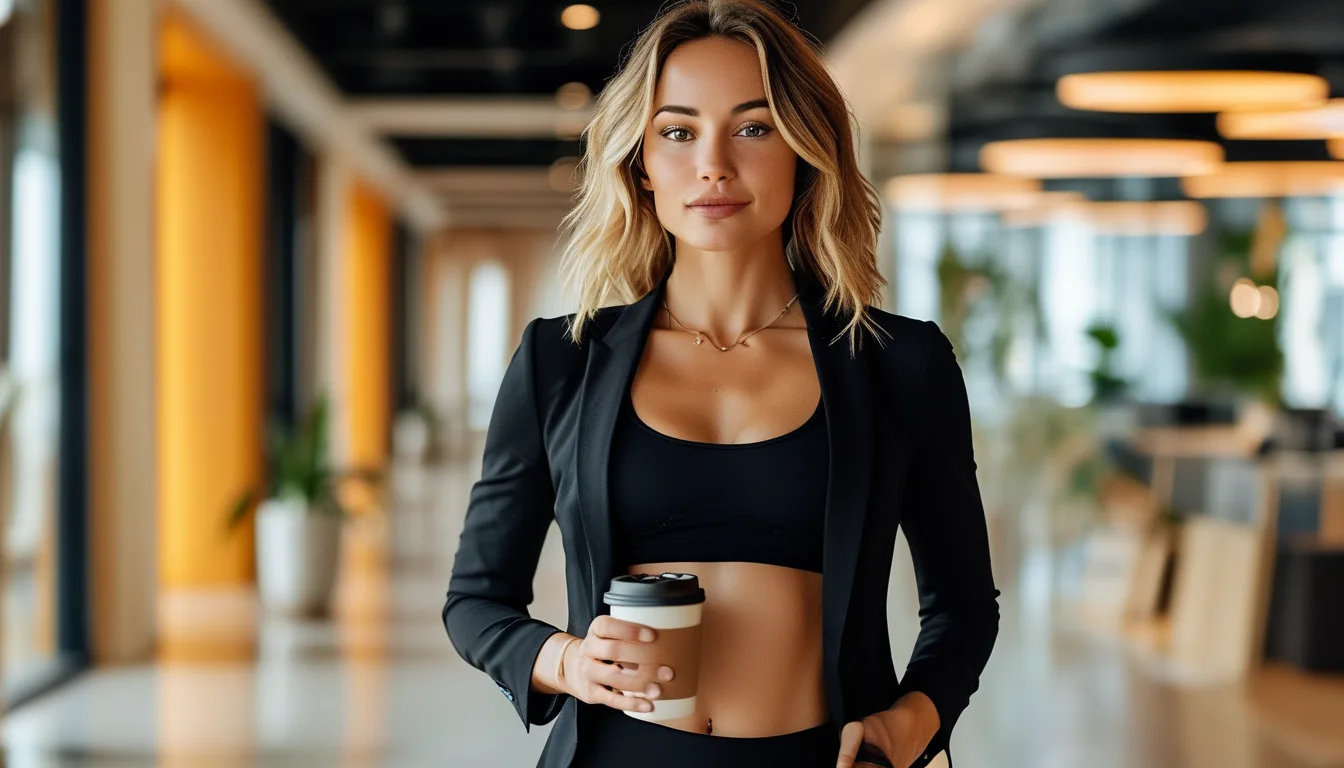
Seen here: High Waist Bootcut Yoga Pants — shop it on bubblelime.com
Keep Reading
This article is for general informational and styling purposes only. Fit, sizing, and product availability may vary.