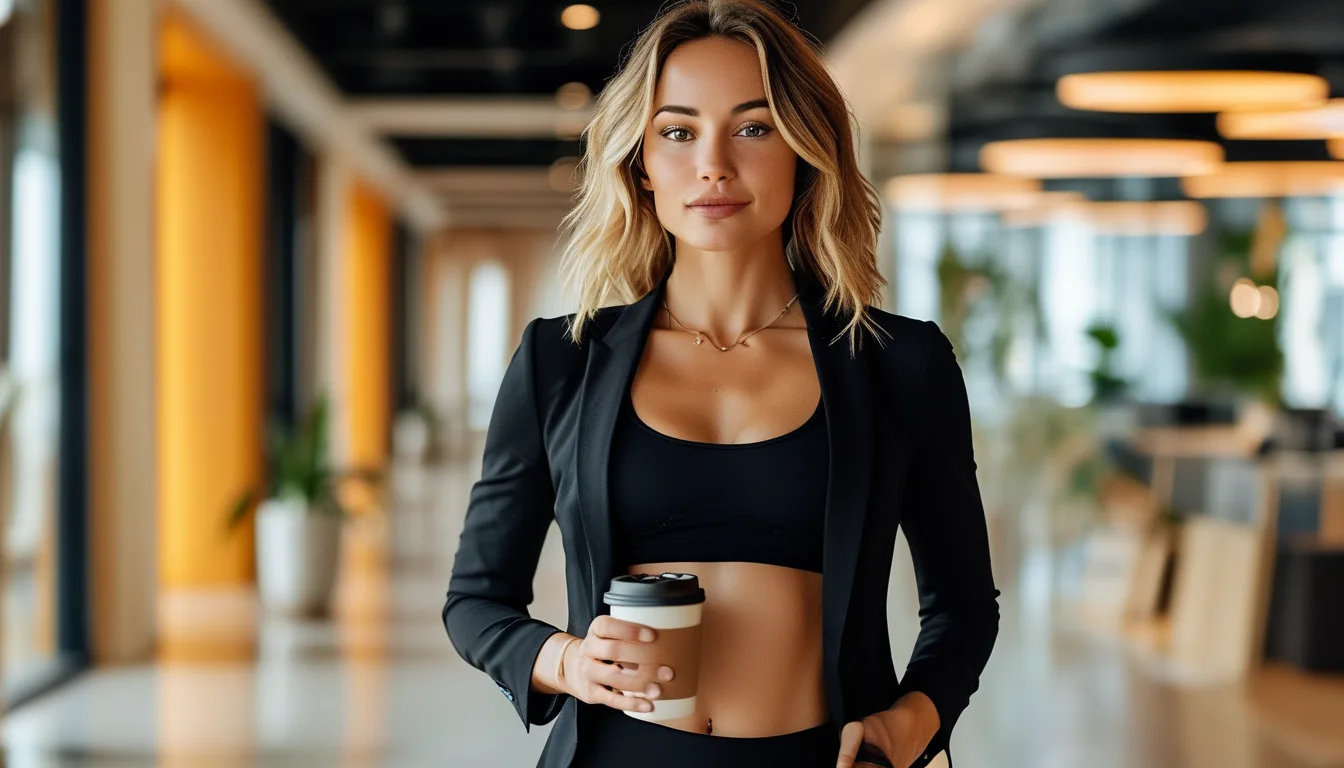
How Bootcut Trousers Read on Camera (and Why the Top Half Is Not the Whole Story)
Quick Answer: Cameras exaggerate sheen, flatten texture, and shift colour, so matte fabrics and mid-tone solid colours read best. Bootcut styles matter on camera because they affect how you sit, how you stand when you step away, and how you move - and because compression trousers that photograph badly are the ones most likely to shine under a webcam. Choose a matte ponte or twill, keep the top half structured, and check yourself on camera once rather than guessing.
The standard advice is that only the top half matters on a video call. Anyone who has stood up mid-meeting to fetch a document knows that is not quite true, and the fabric choice below the desk turns out to matter for reasons that are not about visibility at all.
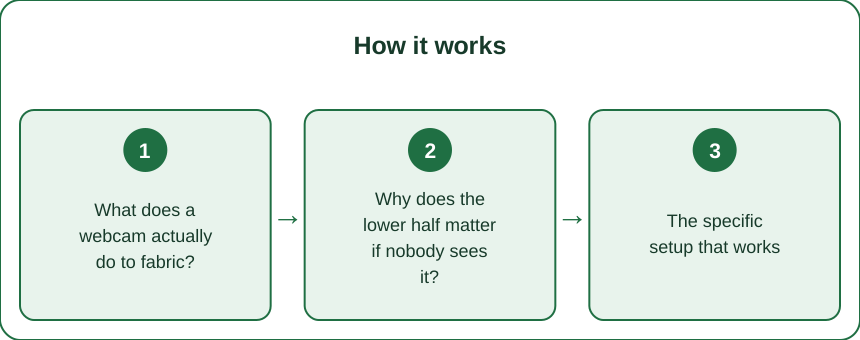
What does a webcam actually do to fabric?
Three things, and each one changes which garments work.
It exaggerates sheen. Webcams handle a narrow dynamic range and compress it hard. A subtle sheen that is barely noticeable in a room becomes a bright reflective patch on camera, particularly under a ring light or a window. This is why technical performance fabrics - the exact ones many bootcut yoga trousers are made from - photograph poorly. The four-way stretch fabrics designed to look sleek in person often read as shiny and slightly cheap through a lens.
It flattens texture. Compression and a small sensor lose fine detail. A beautifully textured ponte and a flat polyester can look nearly identical, and busy weaves turn into noise.
It shifts colour. Auto white balance adjusts to the dominant light in the frame, and colours drift accordingly. Warm indoor light pushes everything yellow; a window pushes everything blue. Deep blacks lose their depth and read as flat charcoal, and true whites blow out to a bright block that can trigger the camera to darken your face.
What this means for garment choice:
- Matte over sheen, always. Ponte, twill, wool blend, brushed cotton.
- Mid-tone solids over black or white. Navy, charcoal, deep green, burgundy, camel.
- Simple textures. Avoid tight stripes, small checks, and herringbone - these produce moire, the shimmering interference pattern that makes a camera look broken.
- Structure over drape on the top half, because the camera flattens shape and structured shoulders survive that better.
Why does the lower half matter if nobody sees it?
Several reasons, and only one of them is being seen.
You will be seen, eventually. Standing to fetch something, adjusting a chair, a colleague arriving, a laptop knocked slightly. Anyone who works on camera regularly has been caught at least once, and the calculation is not whether but when.
Cameras get repositioned. Moving to a different room, joining from a laptop on a kitchen counter, or presenting while standing all change the frame. Standing presentations in particular put the full outfit in shot.
Hybrid days do not stay hybrid. The most common scenario is not a full day of calls - it is calls in the morning and an in-person meeting in the afternoon, or an unplanned trip to the office. An outfit that works only from the chest up is a bet that the day goes as planned.
How you sit affects how you look. This is the least obvious and possibly the most important. Trousers that dig at the waist when seated make you shift and adjust, and constant small movements are visible and distracting on camera. Comfortable seated fit produces a stiller, more composed presence - which is a real professional advantage across a five-hour meeting day.
It affects how you feel. The evidence for enclothed cognition is modest and the practical experience is widely reported: people who dress as though they might be seen tend to conduct themselves differently. Bootcut trousers are a reasonable compromise here - genuinely comfortable for a long seated day, and presentable if the day changes.
The specific setup that works
Fabric, in order of how well it performs on camera:
- Ponte knit - matte, structured, holds a crease-free line, comfortable seated. The strongest all-round choice.
- Wool or wool-blend suiting - excellent on camera, less comfortable for a long seated day
- Cotton twill or a good stretch twill - matte and reliable
- Brushed jersey - comfortable and matte, though it can read casual
- Technical performance fabric - the weakest. It is the one most likely to shine, and the one most bootcut yoga trousers are made from.
Colour:
- Mid to dark solids - navy, charcoal, deep green, chocolate
- Avoid pure black if you also wear a dark top; the camera merges them into an undefined mass
- Avoid bright white anywhere large in frame - it forces the exposure down and darkens your face
The top half, which the camera is actually looking at:
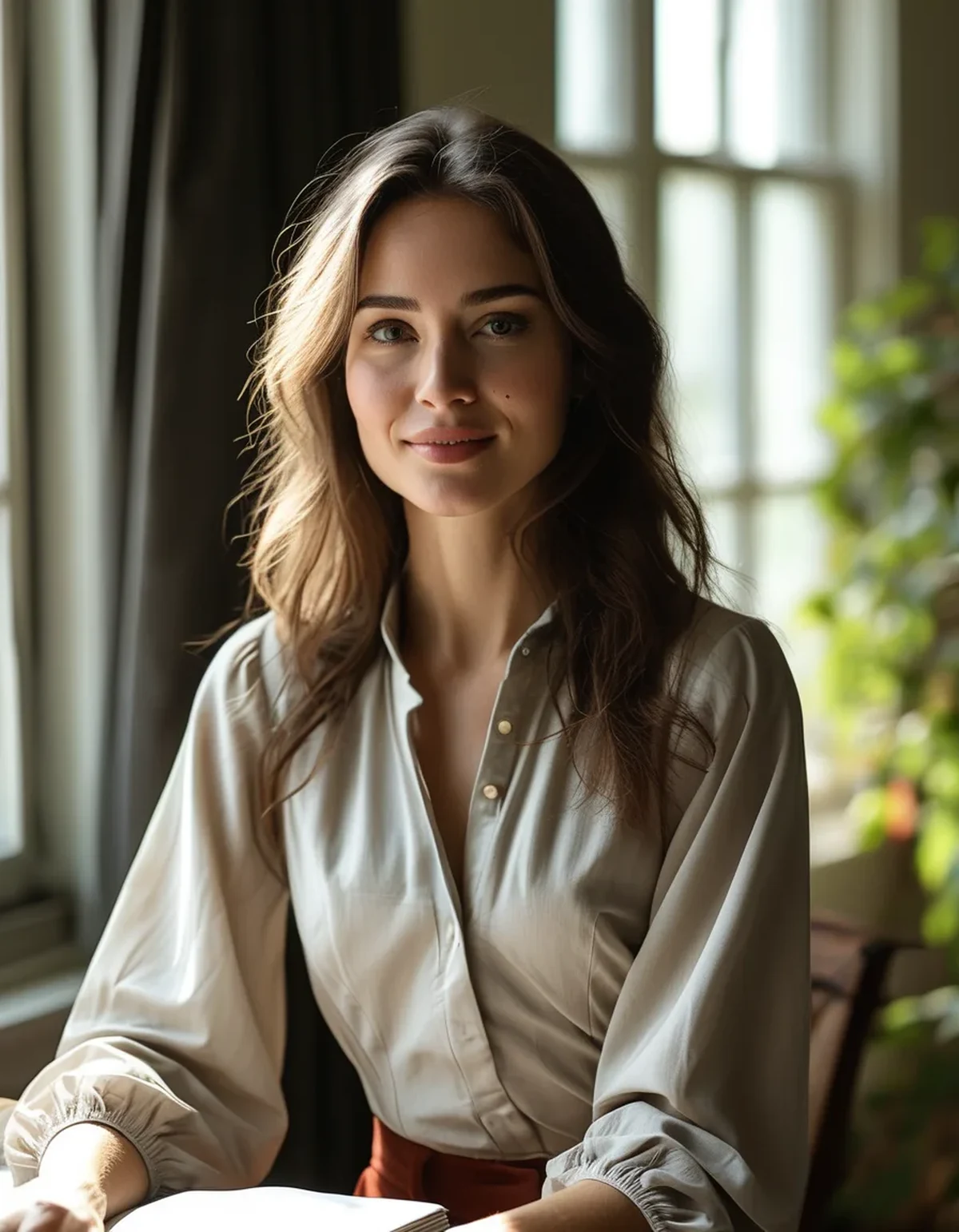
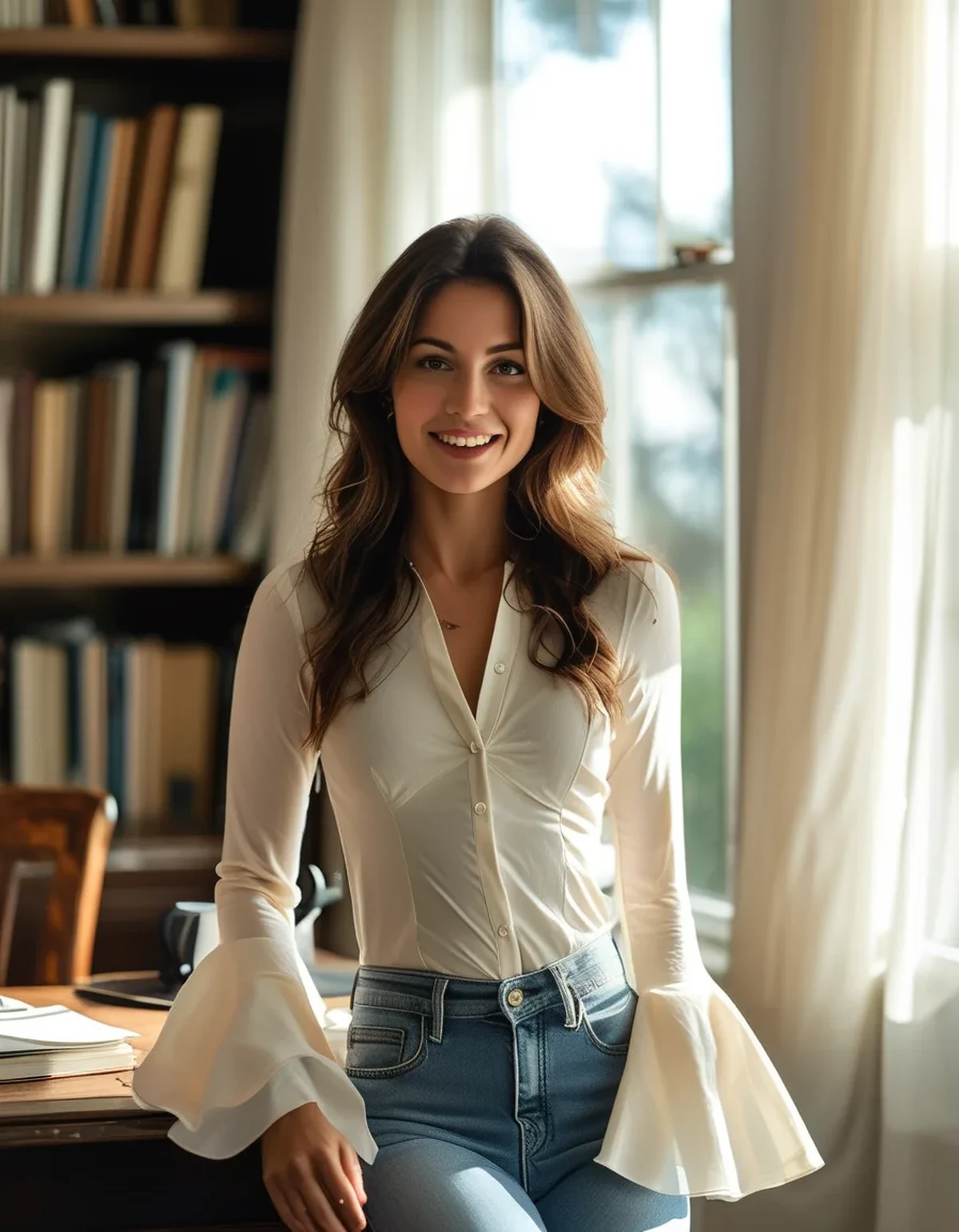
- Structured shoulder - blazer, structured knit, or a shirt with some body. Soft drape collapses on camera.
- A defined neckline. Crew, V, or an open collar. High necks shorten the neck on a flattened image.
- One point of contrast near the face - a collar, a necklace, a scarf - which gives the eye somewhere to land
- Solid over pattern, and nothing with fine repeating detail
The two-minute check that settles it: open your video call software, sit as you normally would, and look. Then stand up and step back. Everything above is a prediction; this is the measurement, and it takes less time than reading about it.
Myth vs Fact: Dressing for Video Calls
Myth: Only the top half matters. Fact: it matters most, and the bottom half determines whether you can stand up, move rooms, or go into the office without changing. The people who say only the top half matters are the people who have not yet been caught.
Myth: Black is the safest colour on camera. Fact: black loses all detail on a webcam and merges with dark backgrounds and dark chairs. Mid-tone colours read far better, and a dark top against a dark background is a common reason someone looks like a floating head.
Myth: Patterns are fine as long as they are subtle. Fact: subtle patterns are the worst case. Fine stripes, small checks, and tight herringbone produce moire - a shimmering artefact that appears to move. Bold, large patterns are safer than small ones, though solids are safest of all.
Myth: Good lighting fixes any outfit. Fact: good lighting improves everything and makes sheen worse. A ring light on a shiny fabric produces a bright reflective band. Lighting and fabric choice have to be decided together.
Myth: Compression leggings and bootcut yoga trousers look the same on camera. Fact: they do not. Compression fabrics are engineered to be smooth, which means reflective, and they read as sportswear on camera in a way they often do not in person. Bootcut styles in matte ponte are the ones that pass, and fabric matters more than cut for this specific question.
Myth: The camera adds ten pounds, so wear something loose. Fact: wide-angle webcam lenses distort proportion, particularly close to the lens, and the fix is camera distance and height rather than clothing. Move the camera back and raise it to eye level - it changes the image far more than any garment does.
FAQ: Video Call Outfit Questions, Answered
Can I wear leggings on a video call day?
If you never leave the chair, nobody will know. The risk is the unplanned stand-up, the room change, and the afternoon that turns into an office visit. Bootcut in a matte fabric covers all three at no cost in comfort.
What colour is most flattering on camera?
Mid-tone jewel colours generally - navy, teal, burgundy, forest green - because they hold their depth through compression and contrast with most backgrounds. Very light and very dark colours both lose detail.
Why do I look shiny on camera when I am not in the mirror?
Usually a combination of a direct light source and a reflective surface, whether that is fabric or skin. Diffuse the light - bounce it off a wall or use a window at an angle - and choose matte fabrics.
Should I stand for presentations?
Many people present better standing, and it changes the frame considerably. If you do, the full outfit is on show and the trousers stop being theoretical.
How do I stop looking washed out?
Face the window rather than sitting with it behind you, avoid overhead lighting alone, and wear something with more colour than your background. Backlighting is the most common cause and the easiest to fix.
TL;DR:
- Webcams exaggerate sheen, flatten texture, and shift colour - matte mid-tone solids win
- Technical performance fabrics are the most likely to shine; matte ponte and twill are the reliable choice
- Avoid pure black, bright white, and fine repeating patterns that produce moire
- The lower half matters for standing up, room changes, and afternoon office trips - not just for being seen
- Check yourself on camera once, sitting and standing. It takes two minutes and answers everything
Dressing for camera is mostly a fabric decision rather than a style one. A matte bootcut and a structured top handles a full day of calls, an unplanned stand-up, and a last-minute trip into the office - which is more than most video-call outfits can claim.
See It in Motion
Seen here: Bootcut Capri Yoga Pants with Pockets — shop similar styles on bubblelime.com
Keep Reading
This article is for general informational and styling purposes only. Fit, sizing, and product availability may vary.