The Fabric Test That Decides Whether Bootcut Reads as Trousers
Quick Answer: The four properties that decide whether bootcut yoga pants read as trousers are opacity, surface sheen, weight, and how the fabric drapes at the hem. Look for matte, dense fabric of at least around 250 gsm - ponte, scuba crepe, or a heavy interlock - with a hem that hangs in a straight column rather than clinging. A thin shiny jersey will never pass regardless of cut, colour, or styling.
You own two pairs of black bootcut pants. One of them you’d wear to a client meeting without a second thought, and one of them you’d only wear to the supermarket. They’re the same cut, the same colour, the same length.
The difference is fabric, and it’s four specific properties. Once you know what to check, you can tell in about ten seconds in a shop - or from a product photo, most of the time.

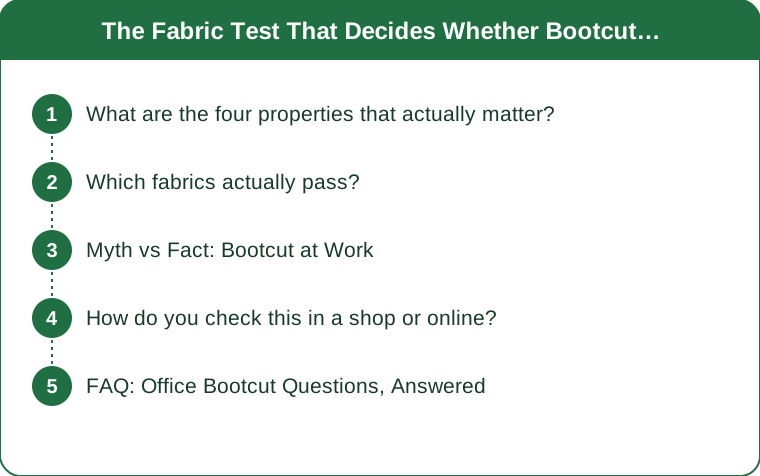
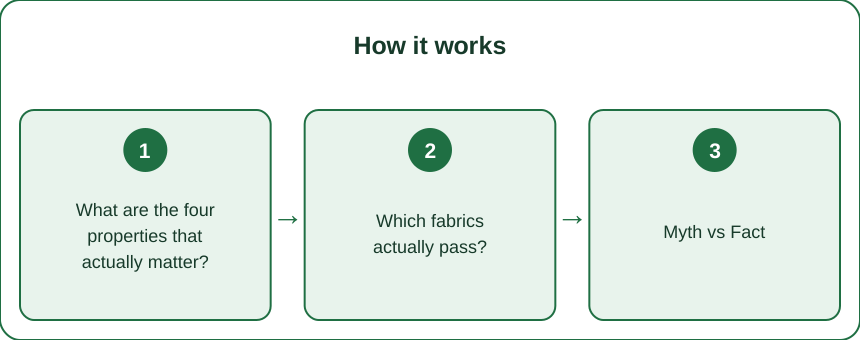
What are the four properties that actually matter?
In order of how much they decide the outcome.
1. Opacity - the one that ends the discussion. If the fabric goes translucent when stretched over the thigh or when you bend, nothing else matters. The test: pull the fabric over your hand and see whether you can read text through it. In a shop fitting room, bend forward and look in the mirror at the back of the thighs. Anything less than fully opaque under tension reads as activewear immediately, and reads worse than that under office lighting.
2. Surface sheen. This is the property people notice without being able to name. Technical fabrics with a high nylon or polyester content and a smooth face reflect light in a way woven trousers don’t. A matte face reads as clothing; a slight sheen reads as gym kit, even at a distance where nobody can see any other detail. Hold it toward a window and tilt it - if the highlight travels across the surface, that’s the sheen that gives it away.
3. Weight. Heavier fabric hangs rather than clings, and hanging is the entire visual difference between a trouser and a legging. Roughly 250 gsm is the practical threshold, and the good office-appropriate options are typically 280 to 350. Weight is rarely listed, so use a proxy: bunch a handful and let go. Heavy fabric falls straight down; light fabric springs back and clings.
4. Drape at the hem. The bootcut flare has to be created by the fabric, not just the pattern. A fabric with body holds the flare open; a thin one collapses back against the ankle, which turns a bootcut into a slightly odd-looking legging. Hold the pants up by the waistband and look at whether the hem hangs open or falls flat.
Which fabrics actually pass?
By name, since the product descriptions rarely help.
Ponte de roma - the most reliable option. A double-knit with a firm, stable structure and a matte face. Heavy enough to hang, stable enough not to bag out at the knee, and it genuinely reads as trouser fabric. Typically 280-340 gsm. The main downside is warmth, which is a benefit from October onward and a problem in July.
Scuba crepe. Slightly textured surface, excellent body, very matte. Holds a flare beautifully. Can look bulky at the waist on some cuts, so it wants a flat-front or seamed waistband rather than a wide elastic one.
Heavy interlock or double-knit jersey. Good if it’s genuinely heavy. The word ‘interlock’ alone doesn’t guarantee weight - plenty of light interlock exists.
Ttechnical woven blends with elastane - the fabrics used for travel trousers. Not knit at all, and they read as trousers because they are. Best option for warm weather, since they’re far cooler than ponte.
What doesn’t pass, regardless of styling:
- Standard performance jersey - the fabric most yoga pants are made of. Thin, sheened, clings.
- Anything described as ‘buttery soft’ or ‘second skin’. Those descriptions are precisely describing the properties that make a fabric read as activewear.
- Anything with visible flatlock seams, contrast stitching, or a logo on the leg
- Very high elastane content - above about 15 percent, fabric tends to cling and recover rather than drape
A note on colour: black hides sheen better than any other colour, and navy is second. The same fabric in grey or a mid tone shows every property in this list more clearly. If you’re testing a borderline fabric, the safest colour is the darkest one.

Myth vs Fact: Bootcut at Work
Myth: A bootcut shape automatically reads as trousers. Fact: Shape helps and doesn’t decide it. A bootcut in thin shiny jersey reads as a flared legging, which is a distinctly less formal garment than a straight leg in ponte. Fabric outranks cut.
Myth: A wide elastic waistband is the giveaway. Fact: It’s a giveaway only if it’s visible. Under a top that covers the waistband - which is most tops - nobody knows what’s under there. A high elastic waistband under a longer top is invisible, and it’s the most comfortable part of the whole proposition.
Myth: You need to size down for a sleeker line. Fact: The opposite. Sizing down stretches the fabric, which reduces opacity, increases sheen, and makes every seam visible. Fabric under tension always reads as activewear. If you’re between sizes for office wear, take the larger one.
Myth: Ironing helps. Fact: Direct heat damages elastane, and most knits don’t hold a press anyway. Steam from a distance, or hang in the bathroom during a shower. A ponte that needs pressing to look right is the wrong ponte.
Myth: Nobody can tell anyway. Fact: People can’t usually articulate why, but they read fabric quality accurately and immediately - it’s one of the most reliable visual judgements humans make about clothing. The good news is the reverse also holds: get the fabric right and nobody questions the rest.
How do you check this in a shop or online?
A ten-second in-person test and a set of things to look for online.
In person, in this order:
- Stretch it over your hand - can you see skin or read text through it? If yes, stop here.
- Tilt it toward the light - does a highlight travel across the surface?
- Bunch and release - does it fall or spring back?
- Hold by the waistband - does the hem hang open or collapse inward?
- In the fitting room, bend forward and check the back in the mirror. This is the test people skip and the one that catches the most failures.
Online, where you can’t touch anything:
- Look for a gsm figure. Increasingly listed, and 250+ is your threshold.
- Read the fibre content. Look for high viscose, rayon, or modal content for drape; be cautious above 15 percent elastane; nylon-dominant usually means sheen.
- Look at the product photos in movement, if there are any. A fabric that holds its shape as the model walks has body; one that ripples and clings doesn’t.
- Check the shadow at the hem. In a still photo, a heavy fabric casts a clear vertical shadow line where it hangs. A light one doesn’t.
- Search reviews for the word ‘sheer’. It’s the single most useful search term for this category and someone always says it.
The seam detail worth checking: a proper trouser-style construction with a centre back seam and a curved waistband reads as tailoring. A four-way flatlock activewear construction doesn’t, no matter how good the fabric is. Both details are usually visible in the product photos if you zoom.
FAQ: Office Bootcut Questions, Answered
What top length works best with bootcut?
Ending at the hip bone or just below, which covers the waistband and keeps the vertical line unbroken. A top that ends mid-hip cuts you at the widest point. Tucked-in tops work only if the waistband looks like a trouser waistband.
What shoes stop it looking like activewear?
Anything with a slight heel or a defined shape - a loafer, a block heel, an ankle boot. The hem should just clear the floor at the back with those shoes on. Trainers with bootcut is a specific casual look and it doesn’t read as office.
Do these need to be dry cleaned?
No, and dry cleaning solvents are hard on elastane. Cold wash inside out, no fabric softener since it coats fibres and increases sheen over time, and dry flat or hang. Tumble drying is what turns a good ponte into a bagged-out one within a year.
Will they bag out at the knee?
Ponte and scuba resist it well; lighter jersey doesn’t. If a pair bags at the knee within a few wears, the fabric was too light or the recovery too poor, and no care routine fixes it.
TL;DR:
- Four properties decide it: opacity, sheen, weight, and hem drape - in that order
- Test by stretching over your hand, tilting to the light, bunching and releasing, and bending in the fitting room
- Ponte de roma, scuba crepe, and heavy interlock pass; standard performance jersey doesn’t
- Roughly 250 gsm is the threshold; 280-340 is the comfortable zone
- Size up rather than down - fabric under tension always reads as activewear
- Black hides sheen best; grey and mid tones expose everything
Cut and colour are what people shop for. Fabric is what decides it, and you can check all four properties in ten seconds.
See It in Motion
Seen here: High Waist Yoga Leggings with Side Pockets — shop it on bubblelime.com
Keep Reading
This article is for general informational and styling purposes only. Fit, sizing, and product availability may vary.