The Hem Length That Decides Whether Bootcut Reads as Office or Gym
Quick Answer: For office wear, a bootcut hem should end roughly half an inch to one inch above the floor at the back and just brush the top of the shoe at the front. Too short and it reads as athletic; too long and it reads as unhemmed. Because bootcut flares below the knee, the correct length is shoe-specific - one pair of trousers cannot work with both a flat and a heel.
Most of the debate about whether bootcut is workplace-appropriate is actually a debate about hemming, and hemming is the one variable people never adjust.

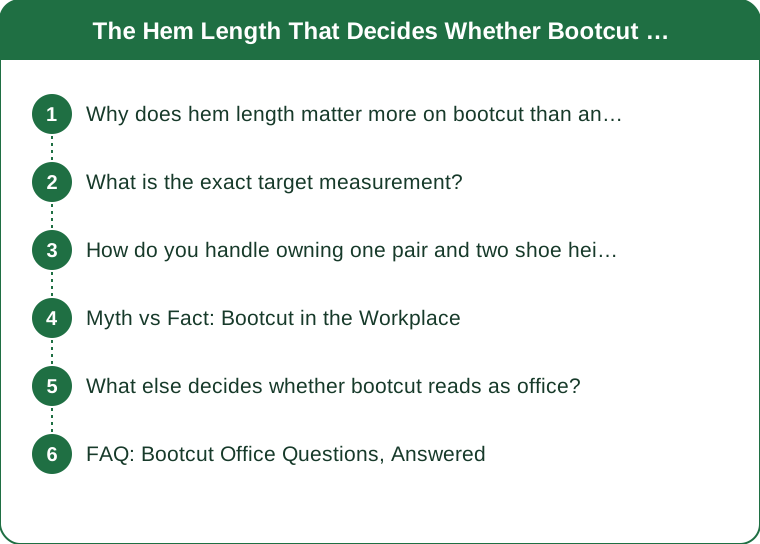
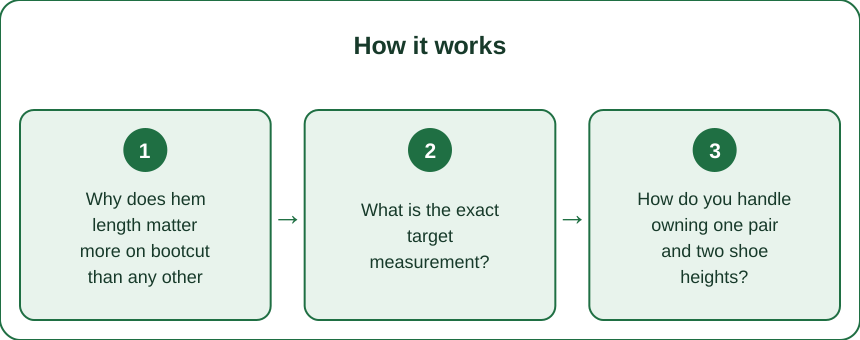
Why does hem length matter more on bootcut than any other cut?
Because the flare only reads as intentional when it lands correctly on the shoe.
A straight-leg trouser has a fairly forgiving hem range. An inch short reads as a cropped trouser, which is a legitimate style. An inch long reads as slightly relaxed.
Bootcut has no such tolerance. The whole point of the cut is that the leg widens from the knee to accommodate a shoe, and the widening only makes visual sense if there is a shoe at the end of it that it accommodates.
Too short by an inch: the flare opens out over nothing, and the eye reads a wide gap between the hem and the shoe. This is the exact silhouette of an athletic flare legging, which is why the same trousers can look like activewear at one length and tailoring at another.
Too long by an inch: the hem pools on the floor, catches under the heel, and reads as unaltered off-the-rack. It also wears through at the back within a few months.
The consequence people miss: because the flare’s width is fixed at the hem, changing the shoe changes the relationship completely. A flat shoe under a hem cut for heels leaves the trouser dragging. A heel under a hem cut for flats leaves two inches of ankle showing under a wide flare, which is the least flattering version of this cut.
This is why the single most useful thing you can do with bootcut is decide the shoe first.
What is the exact target measurement?
Half an inch to one inch off the floor at the back, and a slight break at the front. Measured with the shoes on.
The specification:
- Back hem: ends about half an inch to one inch above the floor when standing. Any lower and it drags with each step; any higher and the back of the shoe shows in a way that unbalances the line
- Front hem: rests on the top of the shoe with a very slight break - a single soft fold in the fabric. No break reads as too short; two or more folds reads as too long
- The angle: most well-hemmed bootcut trousers are cut very slightly longer at the back than the front, which is what produces this simultaneously
How to actually check it. Wear the shoes you will wear with them. Stand naturally on a hard floor, not carpet, in front of a full-length mirror. Look at the gap at the back first - that is the measurement that goes wrong most often.
Then walk. A hem that looks right standing still can drag when you move, particularly on a heavier fabric that swings. Ten steps tells you what standing does not.
On sitting. Bootcut rides up when you sit, and a correctly hemmed pair will show a couple of inches of ankle or sock at a desk. That is normal and not a hemming error. If it rides up to mid-calf, the issue is the rise or the fit through the thigh, not the hem.
Cost and time: hemming trousers is one of the cheapest alterations there is, typically well under the cost of a shirt, and most tailors turn it around in a few days. For a trouser you wear weekly, it is the highest-return money in your wardrobe and most people never spend it.
How do you handle owning one pair and two shoe heights?
Three workable options, in order of how well they actually work.
Option 1: Hem for the heel, accept the flat is off. This is the standard advice and it works if you wear the heel most of the time. The trouser will be slightly long with flats, which is more forgivable than slightly short - a small drag reads as relaxed, whereas a gap reads as wrong.
Option 2: Buy the same trouser twice and hem differently. Expensive and slightly absurd, and it is genuinely what people who wear bootcut daily end up doing with their one best pair. Worth it for a work uniform, not for anything else.
Option 3: Standardise the shoe height. The most practical answer and the least discussed. Choose one heel height - most commonly a low block heel of about two inches - and buy all your work shoes at it. Everything you own then works with everything else, and the hemming problem disappears permanently.
Why a low block heel is the common landing point: it lifts the hem enough to give a clean line, it is walkable, it works with the flare visually, and it is available in enough styles to cover a work wardrobe. A flat is entirely legitimate too - the point is picking one and staying there.
What does not work: trying to split the difference with a length that suits neither. A hem cut halfway between flat and heel length is wrong with both, and this is the most common self-inflicted version of the problem.
One workaround for occasional use: a hem that is correct for flats can be worn with a heel if the flare is wide enough to sit over the shoe rather than above it. Check in a mirror rather than assuming.

Myth vs Fact: Bootcut in the Workplace
Myth: Bootcut is dated. Fact: Straight and wide legs have dominated recent years, and bootcut has moved back into rotation rather than out of it. In an office context it has never really left, because the cut is genuinely flattering under a blazer.
Myth: Anything stretchy is automatically not office-appropriate. Fact: Fabric weight and finish decide this, not fibre content. A thick ponte or a wool blend with elastane reads as tailoring. A thin shiny jersey reads as activewear. Both are stretchy.
Myth: Bootcut makes you look shorter. Fact: A correctly hemmed bootcut with a small heel is one of the more elongating cuts available, because the unbroken line from hip to floor is longer than a cropped or tapered leg allows. The shortening effect people describe comes from a hem that ends too high.
Myth: You need to wear heels with bootcut. Fact: A flat works well, provided the hem is cut for the flat. The requirement is that the hem matches the shoe, not that the shoe is elevated.
Myth: Nobody notices hem length. Fact: Very few people consciously notice it and almost everyone registers the result. Fit is what separates an outfit that looks considered from one that looks approximately right, and hem length is the largest single component of it in a trouser.
What else decides whether bootcut reads as office?
Four things beyond the hem, in order of visual impact.
Fabric weight and drape. Look for something that holds a shape rather than clinging. Ponte, wool blend, heavy twill, and structured crepe all work. A thin jersey with visible sheen does not, regardless of cut. The test: pinch the fabric and let go. If it falls back into shape, it will read as tailoring. If it stays creased or clings, it will not.
Matte finish. Sheen is the fastest tell. Almost every fabric that reads as gym wear has some degree of surface shine, and almost every one that reads as office is matte.
The waistband. A visible elasticated athletic waistband under a fitted top undoes everything else. Either a flat waistband with a proper closure, or a pull-on style with a smooth wide band worn under a top that covers it. This is the detail most likely to be visible when you reach up or sit down.
No visible branding, seaming, or reflective detail. Contrast side seams, gusset panels, and logo tabs are all athletic markers. A plain outer seam is what you want.
Proportion of the top. Bootcut is a volume-below cut, so it balances best with something fitted or structured above - a knit that skims, a tucked shirt, a blazer. An oversized top with a bootcut trouser gives you volume at both ends, which is the least flattering combination available and a common accidental result of dressing in a hurry.
A useful sanity check before leaving the house: look at your reflection from about ten feet away rather than up close. Fabric sheen and hem gap are both far more visible at conversational distance than in a bathroom mirror, and ten feet is roughly the distance at which your colleagues see you.
FAQ: Bootcut Office Questions, Answered
Exactly how far off the floor should the hem be?
About half an inch to one inch at the back with your shoes on, and a single soft break at the front. Check standing on a hard floor, then walk ten steps.
Can I hem them myself?
A simple hem on a stable fabric is doable if you sew. On a bootcut the hem is on a slight curve because of the flare, which makes it harder than a straight leg. A tailor is inexpensive and this is a case where it shows.
What shoes work best?
A low block heel of around two inches is the most versatile, and a pointed or almond-toe flat also works. Avoid anything chunky enough to compete with the flare, and avoid ankle straps, which cut the line the trouser is creating.
How do I tell if a stretchy pair is office-appropriate?
Check for matte finish, enough weight to hold shape, a flat waistband, and no contrast seaming. If all four pass, the elastane content is irrelevant.
TL;DR:
- Hem to half an inch or one inch off the floor at the back, with a single soft break at the front
- Bootcut has almost no length tolerance because the flare only works over a shoe
- Pick one shoe height and hem everything to it - splitting the difference fails with both
- Matte finish, enough weight to hold shape, and a flat waistband are the other three tells
- Balance the volume below with something fitted or structured above
The whole office-appropriate question comes down to an inch of fabric and a tailor’s bill smaller than a lunch. Sort the hem and the cut takes care of itself.
See It in Motion
Seen here: High Waist Bootcut Yoga Pants with Side Pockets — shop it on bubblelime.com
Keep Reading
This article is for general informational and styling purposes only. Fit, sizing, and product availability may vary.